


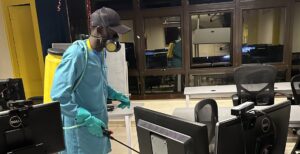
In 2026, the traditional “spray-everything” approach to pest control is obsolete. Not only is it ineffective against resistant species, but it also poses risks to health and the environment. At Neptune, we utilize Integrated Pest Management (IPM)—a science-based, sustainable process that focuses on long-term prevention.
What is IPM?
IPM is a decision-making process that coordinates knowledge of pest biology, environmental information, and available technology to prevent pest damage by the most economical means, with the least possible hazard to people, property, and the environment.
The 5 Core Pillars of an IPM Program
To effectively manage pests in Nairobi’s unique tropical-urban climate, our IPM strategy follows a strict five-step protocol:
1. Inspection and Identification
You cannot treat what you haven’t identified. We start with a thorough forensic inspection of your premises. Is it a German Cockroach or an American one? Is the rodent a Roof Rat or a House Mouse? Accurate identification allows us to target the specific biology of the pest.
2. Monitoring and Action Thresholds
In IPM, seeing one ant doesn’t always mean you need a chemical spray. We set Action Thresholds—the point at which a pest population becomes a health or economic risk. We use pheromone traps and digital monitors to track activity levels 24/7.
3. Prevention (The First Line of Defense)
The most effective way to control pests is to keep them out.
- Sanitation: Removing food and water sources.
- Exclusion: Sealing cracks, crevices, and “pest highways.”
- Cultural Control: Changing habits (e.g., how waste is stored) to make the environment less attractive to pests.
4. Multi-Method Control
When thresholds are met, we use a combination of non-chemical and chemical tools:
- Mechanical Control: Traps, barriers, and vacuuming.
- Biological Control: Using natural enemies or growth regulators (IGRs) to break the life cycle.
- Chemical Control: Used only as a last resort. We prioritize highly targeted “low-toxicity” gels and baits over broad-spectrum sprays.
5. Evaluation and Documentation
IPM is a loop, not a line. After treatment, we evaluate the results and provide the documentation required for PCPB and Public Health compliance. This data helps us refine your IRC (Integrated Risk & Compliance) strategy for the future.
The Benefits of IPM for Your Nairobi Business
- Economic Efficiency: By focusing on prevention, you spend less on emergency “knockdown” treatments over time.
- Health & Safety: Minimal chemical use means a safer environment for your staff, family, and pets.
- Compliance: Our IPM reports are designed to satisfy 2026 health and safety audit requirements.
- Reduced Resistance: Using multiple methods ensures that pests don’t develop immunity to a single chemical.